

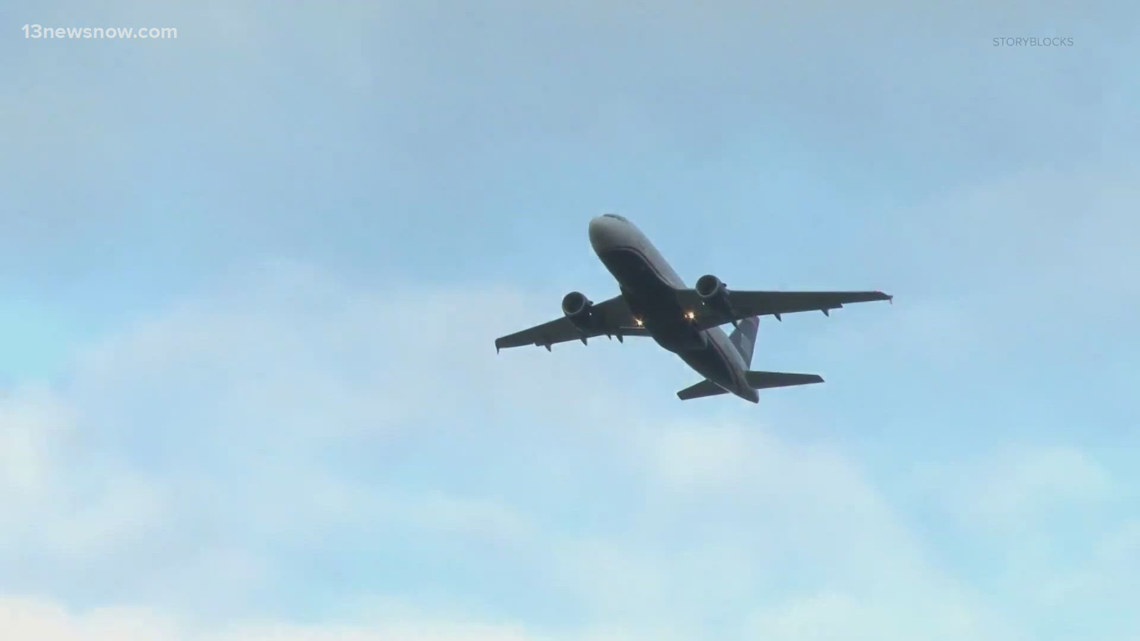
Experts warn extreme heat could complicate record-breaking travel as 72.2 million Americans gear up to travel for Independence Day.
NORFOLK, Va. — As Americans gear up for the Independence Day holiday, experts are warning that extreme heat may complicate what is expected to be a record-breaking travel period.
According to AAA, an estimated 72.2 million people are expected to travel between June 28 and July 6, making it one of the busiest Fourth of July travel periods ever recorded.
But just ahead of the holiday rush, a wave of extreme heat is putting added pressure on transportation systems, especially air travel.
“Extreme heat impacts air travel in multiple ways,” said Kent Lewis, Flight Safety Manager at Hampton University’s Department of Aviation. “When the air is hot, the molecules are farther apart, which lowers air density. That reduced density makes it harder for planes to produce lift.”
Lewis explained that in these conditions, planes require more runway for takeoff and take longer to climb after becoming airborne.
“It also makes it harder for engines to perform at their best,” he added.
Turbulence is another issue. While cruising altitudes are typically smooth, Lewis said passengers might notice bumpier conditions during ascent and descent. “You need the density in the air not only for lift but also for optimal engine performance,” he said.
Other modes of transportation are also feeling the heat. Amtrak was forced to slow trains this week in the Northeast and Mid-Atlantic regions due to high temperatures affecting the tracks.
Despite the concerns, a spokesperson for Norfolk International Airport said they have not had to delay any flights so far and do not expect major disruptions unless the heat intensifies further.
Experts emphasize that although summer heat can cause delays or discomfort, travelers should not worry about safety. “Flying remains the safest form of travel,” said Lewis. “Airlines and crews are trained to adjust for these kinds of weather conditions.”
As millions of Americans prepare for long-anticipated summer vacations, officials recommend staying hydrated, planning ahead, and being patient with potential weather-related delays.
